
Are There More Gods Than One?
Michael Heiser, Larry Sanger, and the Twitter Battle Lines

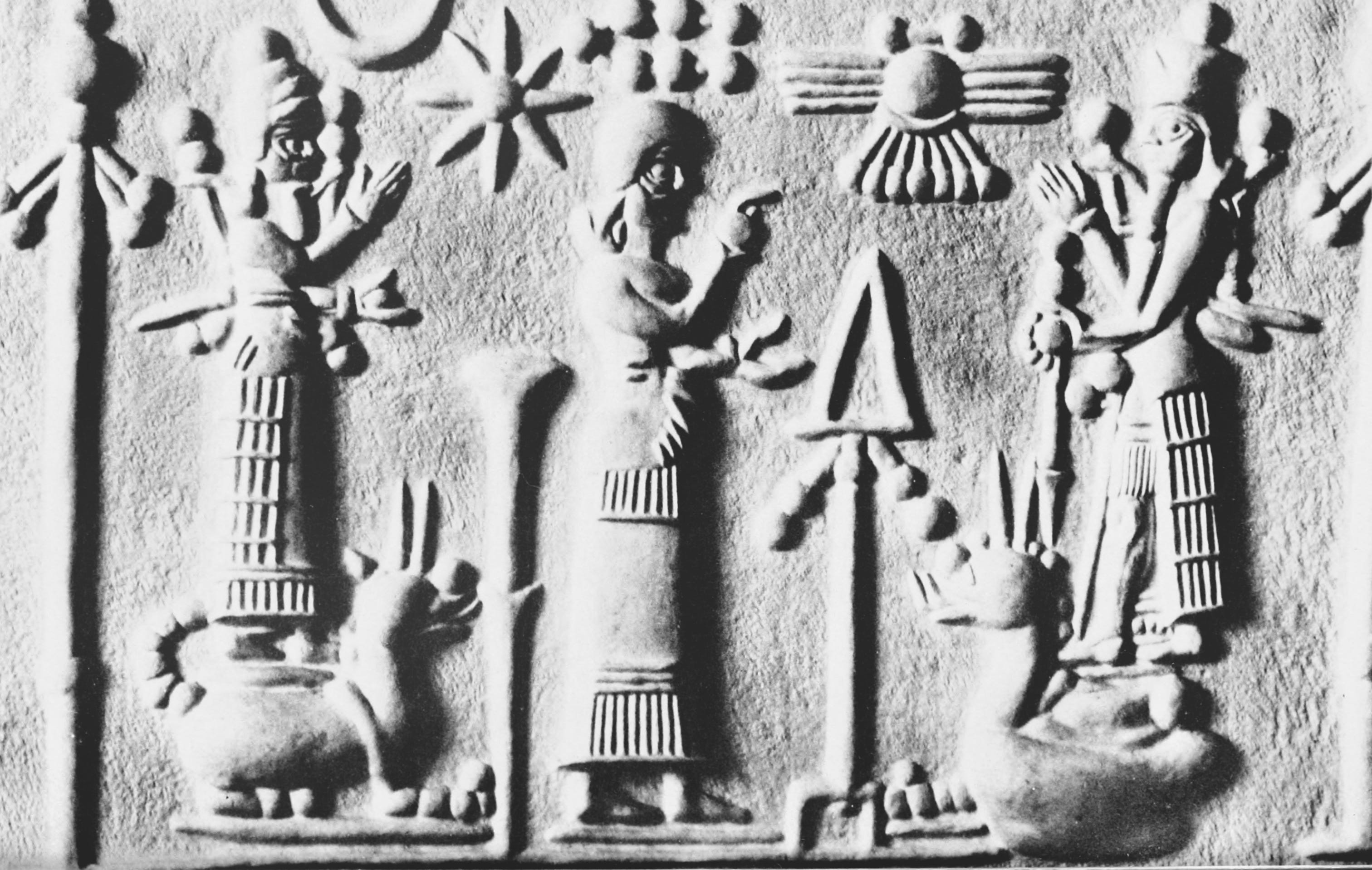
A couple weeks back on Twitter, there was a great kerfuffle which I cannot quite pinpoint the beginning of, but which stood out as mostly circling around Larry Sanger, the former Wikipedia co-founder recently converted to Christianity about/to whom I have written once before. The dispute was over the use of the term “gods” with respect to the pagan deities that actually exist, e.g. the evil spirits whom pagans have often worshiped. Simply put, the question was: is there more than one god? Personally, I found the debate in the shape it actually took fairly silly on almost all sides, as it seemed to be all words and no substance. But rather than argue with anyone in particular about it, I just figured it would be best to classify the senses of the term “god” and how it might be predicated or not of different beings, and then classify the senses of the whole statement accordingly.
Quid Significet “Deus”?
The Latin deus, the Greek theos, the Hebrew el, and the English “god” all have a variety of senses, but there is something of a common set among them all in traditional theological discourse, which can also be ranked in roughly the same priority among them all. However, the traditional map of these senses differs from what some people in Heiser’s circles suggest.
Primary Traditional Sense
Proper Sense
The main and most distinctive/unique sense of “god” as used in Western history is that of the First Cause. The terms in various languages and their etymologies all suggest this, whether their roots are in transcendent brightness (deus), universal providence (theos), supreme power (el),1 or absolute goodness (“god”). “God” uniquely signifies the Cause of the world, the source of all its light, beauty, order, goodness, and power. This can truly be applied in its proper sense only to the one true God, and no one else.
Improper Senses
By Similitude
Sometimes people are called “gods” by some resemblance to the attributes of God properly. So, for example, as God is almighty, so very powerful men are sometimes called “gods” by resemblance: “That man is a wood-cutting god.” Or, as God has all dominion, so men with authority are sometimes called “gods” by resemblance: “I said, ‘You are gods, And all of you are children of the Most High.’” In general, those who excel others in some particular perfection are called “gods” improperly by resemblance to God, who is most perfect in every respect.
By Opinion
Sometimes people or beings are called “gods” not to impute deity to them, but rather because other people impute deity to them. So, for example, sometimes we refer to “gods” such as Allah or Thor or Zeus or the like, not because we consider any of them to be the highest power or even necessarily to exist at all, but because they are or were believed to be the highest powers by those who worship them.
By Office
Sometimes people are called “gods” not because they are believed to be a god in a proper sense, but only because they represent a god functionally, e.g. when Moses was “god” to Aaron. This may overlap with the use by resemblance for authority figures.
Alternative “Heiserite” Sense
It may or may not always be the case that Heiser and his followers mean the same things by the same terms, and it does not necessarily seem to be the case that Heiser’s camp would grant our primary modern English use of “gods” maps directly onto elohim. In any case, the el-terms make up the focal point of their arguments.
Heiser himself defines elohim thus in The Unseen Realm:
The biblical use of elohim is not hard to understand once we know that it isn’t about attributes. What all the figures on the list have in common is that they are inhabitants of the spiritual world. In that realm there is hierarchy. For example, Yahweh possesses superior attributes with respect to all elohim. But God’s attributes aren’t what makes him an elohim, since inferior beings are members of that same group. The Old Testament writers understood that Yahweh was an elohim—but no other elohim was Yahweh. He was species-unique among all residents of the spiritual world.
Under this definition, we can either imagine elohim, and perhaps “gods,” as equivalent to “heavenites” or something. But the raw location data, despite Heiser’s wording here and elsewhere, is clearly not the actual point, for presumably they would not call Enoch or Elijah elohim. Rather, to be more precise and metaphysical, since the classification as used and applied has far more to do with the nature of the beings in the spiritual realm, we might gloss the definition simply as “spirit.” We could get even more scholastic, and we might read it specifically as a logical category for all beings from which we divide the predicate “visible” or maybe “corporeal.” Notice that while Heiser’s “species-unique” language suggests that Yahweh and the other elohim are in a genus together, which is unacceptable, I think we can charitably read the point not as a genus of being but as a logical category.
So, if we reduce a Heiserite definite of elohim to its raw logical content under the most charitable reading, elohim signifies beings who do have reason but are not essentially or naturally physical. Basically, elohim means spirits, not spirits divided from their bodies (like the human soul postmortem), but “native spirits.” One might think this is almost exactly the same thing that the Christian tradition has almost always grouped under the term “angels,” but there is one key difference. “Angels” as a category includes finitude, and thus the status of being a creature, whereas elohim in the Heiserite sense includes no such implication and can thus extend to apply to God.2
Now, whether or not this or something like it is what elohim really meant in ancient Hebrew is a matter for historical and linguistic debate. Whether it is the historical usage of the term or not has no actual bearing on whether we should speak of a plurality of gods today, since the English “gods” does not have to have an identical semantic range or identical primary sense to elohim. Plenty of scholars of the Ancient Near East seem to think elohim was used in this way, and if so, cool beans.
Comparison of Claims
With these definitions properly understood, we can proceed to what is actually being claimed.
The Heiserites are, in essence, at the level of pure logical content, saying the following:
There are many spiritual beings.
Sanger is, in essence, at the level of pure logical content, saying the following:
There is one Highest Cause for the world.
Obviously, these two claims have no disagreement, and all Christians have always held both. Sanger, however, seems to add another claim, which as best as I can steelman it seems to be:
The term “gods” ought not to be applied in an unqualified way to spiritual beings in general, but reserved for the First Cause.
This claim is not unreasonable, at least if we stick to conventional English usage. The argument would be something like this:
The term “god” in English primarily and distinctly conventionally refers to divine nature in the proper sense, i.e. that of the First Cause.
Unless qualified to elucidate an improper sense of “god,” the statement “There are many gods” will generally appear to signify3 that there are many First Causes/that the First Cause is plural.
That the First Cause is plural is an error.
Statements that will appear to signify errors ought to be avoided.
Therefore the statement “There are many gods” ought to be avoided.
I will judge that this is probably true so far as it goes.
However, I think it is also true that Heiser himself, along with some of his followers, have in fact done an adequate job qualifying themselves so that the affirmation “There are many gods” comes through to most probable audiences in the true sense “There are many spiritual beings” rather than in the false sense “There are many First Causes.”
Conclusion
My motto is, “Divide senses lest you divide people.”4 The Sanger/Heiserites debate has been, I think, largely over words, hardly at all over sense, and in some proportion over prudential judgments about how one ought to speak. There is certainly no need for either accusations of stupidity or heresy against most of the people on either side, and my goal here really was just to show why and how that is the case.
The Bible itself speaks of “gods” in the plural often enough, and it makes little difference practically speaking whether we interpret this in the classical sense, as an improper use of “god” by opinion, or in the Heiserite sense, as a proper use of a logical category of beings that includes rationality but excludes natural corporeality. (And, of course, in some verses there is a debate as to whether it refers to human authorities or spiritual beings, but, again, this amounts to relatively little for this debate or in theology more broadly.)
So, chill, guys. And always distinguish.
Though the etymology here is uncertain and disputed.
And, once more, for those of you who care, not as a genus in which God is a particular member, but as a common logical category;
Implicit premise I omitted for brevity: any term will generally appear to signify its primary and distinct conventional sense unless qualified.
Well, actually, I just thought of that now.
You might consider actually linking to and naming the blog post you're responding to: https://larrysanger.org/2026/05/there-is-none-else-beside-him/